 middle place
A journal for the space between therapy sessions.
You have fifty minutes a week with your therapist and a hundred and sixty-seven hours without them. A therapy journal is how the week makes it into the room.
Updated 5 November 2026
Why keep a journal between sessions
Sit down on a Thursday and try to remember what upset you on Saturday. Usually you can’t, or you remember the conclusion you came to and not what actually happened. So the session goes to whatever is loudest that morning.
A journal between therapy sessions fixes that. You write things down while they’re fresh, and when the appointment comes you have the actual week in front of you: what happened, how you reacted, what you tried, what you want to talk about. Many therapists encourage it for exactly this reason. It’s also somewhere to put things at 11pm on a Tuesday, when there’s no one to tell.
What to write down
You don’t need to write an essay every day. A few lines when something happens is enough. The useful things to capture:
- Moments that stood out. An argument, a good conversation, a wave of anxiety in the supermarket. What happened, in plain terms.
- Your reaction. What you felt, what you thought, what your body did, and what you did next.
- Patterns. “Third time this month I’ve gone quiet when my manager raises his voice.” Patterns are much easier to see written down.
- What you tried. If you’re working on something with your therapist, note when you tried it and how it went, including when it didn’t.
- Questions to bring. Things you want to ask, or the thing you keep meaning to say and don’t.
- What helped. A walk, a person, a song. These are easy to forget and useful to remember.
A simple therapy journal template
What happened: the facts, briefly.
What I felt: name it if you can (angry, ashamed, relieved), or describe it.
What I thought: the story in your head at the time.
What I did: how you responded, and what happened after.
Bring to session? yes / no / maybe.
Use it when something specific happens. On ordinary days, a sentence about how you’re doing is plenty. For more, see the prompts for before and after therapy.
Before and after a session
The night before
Read back over the week. Pick the one or two things that matter most. Write down what you’re hoping to get out of the session, even if the answer is “I don’t know, I just feel off.”
Straight after
Write down the one line you want to remember, anything that surprised you, and anything that felt unfinished. Sessions blur fast; ten minutes afterwards is when you still have it.
How middle place helps
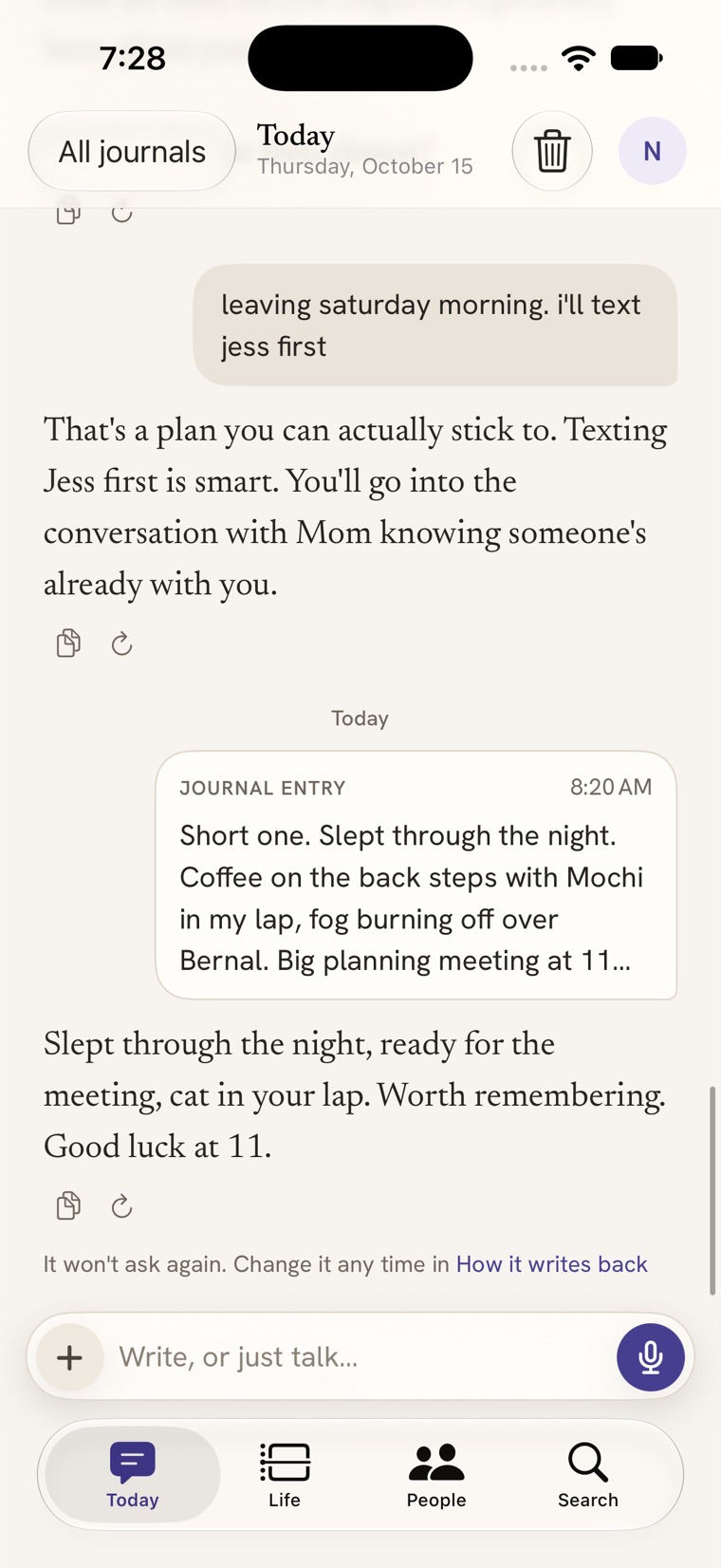
middle place is a journal that writes back and remembers. It started as a place for the days between therapy appointments, and plenty of people still use it that way.
Because it remembers the people you talk about, what you’re working through and what has helped before, you don’t have to re-explain your life each time you write. Write about a hard moment and it reflects it back or asks a follow-up question, or just listens if that’s what you’ve asked for. Mention something you’re dreading on Thursday and it asks afterwards how it went. Moods you mention are logged along the way, so you can see the shape of the week, and save them to Apple Health if you like.
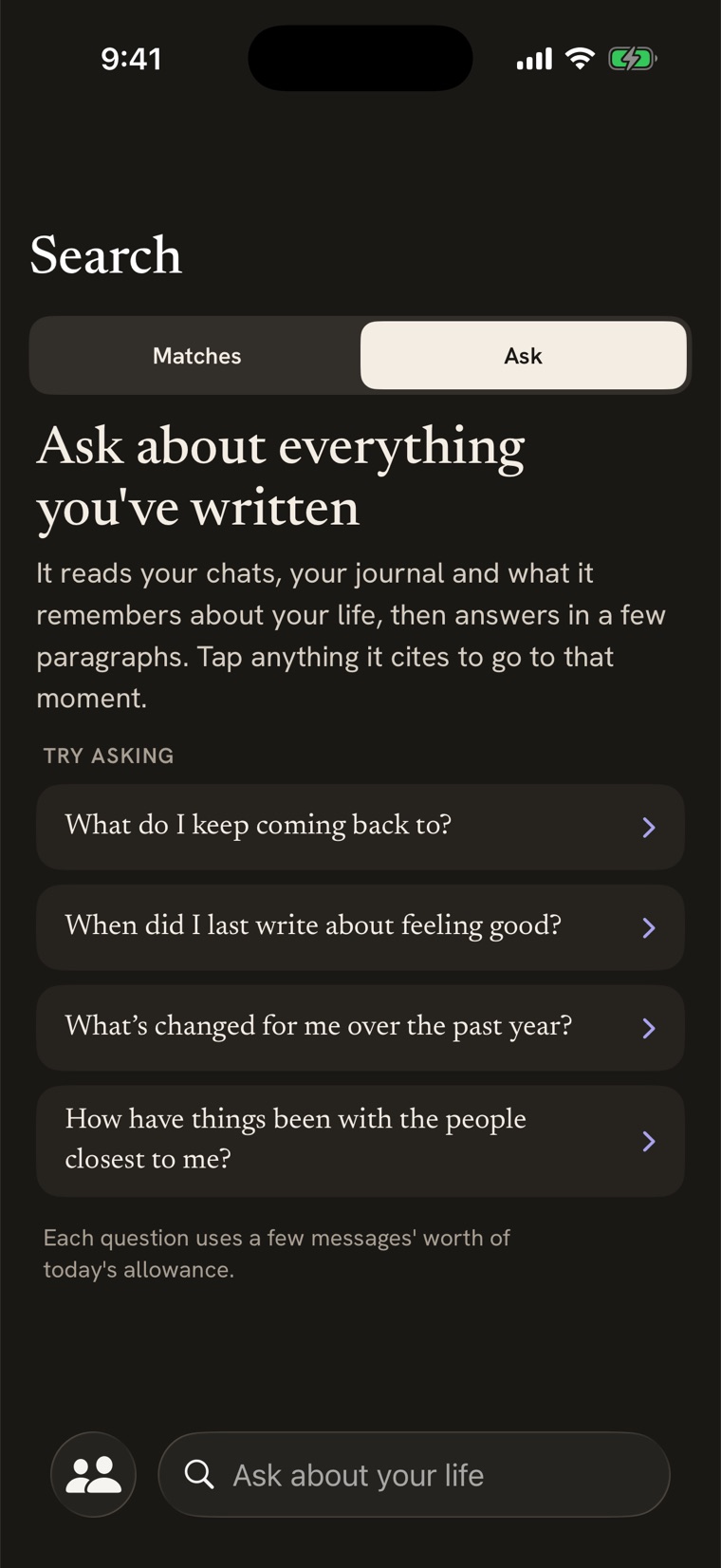
The night before a session, you can ask it something like “what have I written about my mum since last Tuesday?” and get an answer with links to the entries.
Nothing goes to your therapist, or anyone else, automatically. If you want to bring something in, you decide what to read out or show.
What a journal isn’t
A journal, AI or paper, is not therapy and not a substitute for it. middle place is not a therapist, a medical device or a crisis service. It doesn’t diagnose or treat anything. It’s somewhere to put the week so you can bring the real version of it to the person who can actually help.
Keeping it private
The things you write between sessions are some of the most private things you’ll ever write. middle place keeps your journal on your device, encrypts sync between your own devices, can lock with Face ID, and hides its contents from the app switcher. There are no ads or third-party trackers. The private journal guide explains exactly what leaves your device, and when.
Therapy journaling questions
Should I show my therapy journal to my therapist?
That’s up to you. Some people read entries aloud, some summarise, and some keep the journal completely private and just use it to remember what to bring up. All of those work.
How often should I journal between therapy sessions?
Whenever something stands out, plus a short check-in the night before your session. A few lines a few times a week is more useful than a long entry you dread writing.
What do I talk about in therapy if I don’t know what to say?
Read back over what you wrote that week and start with whatever had the strongest feeling attached, even if it seems small. It’s also fine to say you don’t know where to start; your therapist can work with that.
Is an AI journal safe to use alongside therapy?
As a journal, yes: it’s a place to write and reflect. It isn’t therapy and won’t replace your therapist. If anything it says doesn’t sit right, bring it to your session. If you’re in crisis, call or text 988 in the US or find your local line at findahelpline.com.
In crisis? A journal can’t help with that. If you’re in danger of hurting yourself or someone else, please reach people trained to help:
Call or text 988 for the Suicide & Crisis Lifeline (US, 24/7) · Text HOME to 741741 · Call 911 if you’re in immediate danger. Outside the US: findahelpline.com