 middle place
How to process your feelings by writing them down.
Processing a feeling means turning it from a fog into something with a name, a cause and a next step. Writing is one of the simplest ways to do that, because it makes you slow down and put the thing into words.
Updated 5 November 2026
What does “processing feelings” actually mean?
Processing feelings is the work of noticing an emotion, letting yourself feel it, understanding where it came from and deciding what, if anything, to do about it. An unprocessed feeling tends to leak out sideways: snapping at someone, lying awake replaying a conversation, a heaviness you can’t explain. A processed one is still there, but you know what it is and it stops running the show.
You don’t need a special method. But a few steps make it much easier, and a journal is a good place to take them.
Five steps to process a feeling in a journal
1. Write what happened, plainly
Start with the facts, as a camera would have seen them. “My manager moved the deadline in the team meeting and didn’t ask me first.” Keeping the facts separate from your reaction is half the work.
2. Name the feeling, as precisely as you can
“Bad” and “stressed” are where most of us stop. Push one step further: embarrassed, resentful, dismissed, anxious, flat, homesick, jealous, relieved. Often there are two at once. A list of emotion words (a feelings wheel) helps when you’re stuck.
This step matters more than it looks. In a 2007 study at UCLA, Matthew Lieberman and colleagues found that putting feelings into words (“affect labeling”) reduced activity in the amygdala, the part of the brain that reacts to threat. Naming it doesn’t make it go away, but it tends to turn the volume down.
3. Notice where it is in your body
Tight jaw, heavy chest, restless legs, a lump in your throat. Writing down the physical side helps you recognise the feeling earlier next time.
4. Ask what it’s about, underneath
Feelings usually point at something you care about. Resentment often means a boundary got crossed. Anxiety usually means something matters and feels out of your control. Envy can be a clue to what you want. Write: “I think this is really about…”
5. Decide what it needs
Sometimes nothing. Sometimes a conversation, an apology, a walk, sleep, or bringing it to your therapist. Write down one thing, even if the thing is “let it be there for tonight”.
A one-minute version: What happened? · What am I feeling? (two or three words) · Where do I feel it? · What is it about? · What does it need?
Other ways to write through emotions
- Expressive writing. Write continuously about something difficult for fifteen to twenty minutes, without worrying about grammar or sense, on a few days in a row. This is the method psychologist James Pennebaker began studying in the 1980s, and it has been researched widely since, with mixed but often positive results.
- The unsent letter. Write to the person involved, saying everything you can’t or shouldn’t say to them. You don’t send it. It’s for getting the whole thing out.
- Talk it out. If writing feels too slow when you’re upset, record yourself talking and read the transcript later. See voice journaling.
- Two columns. On the left, the story in your head (“they think I’m useless”). On the right, what you actually know. The gap between the columns is usually where the feeling lives.
- Come back to it. Read the entry a day or a week later and add a line about how it looks now. Feelings change; seeing them change is part of processing them.
Prompts for processing feelings
- What’s the strongest feeling I’ve had today, and when did it start?
- If this feeling could talk, what would it say?
- What am I feeling that I haven’t let myself say out loud?
- Is this feeling about now, or does it remind me of something older?
- What would I need to hear right now, and from whom?
- What am I telling myself about what this feeling means about me?
- What part of this is mine to deal with, and what part isn’t?
- What would it look like to be a little kinder to myself about this?
There are more in 90 journaling prompts, including sections for anxiety and relationships.
When you can’t name what you’re feeling
That’s common, and it’s fine to write exactly that: “I feel off and I don’t know why.” Then work backwards through the day: when did it start, who was there, what was said, what were you doing just before. Very often the cause shows up halfway down the page. If you still can’t find a word, describe the feeling instead: its weight, its temperature, what it makes you want to do.
How middle place helps you process feelings
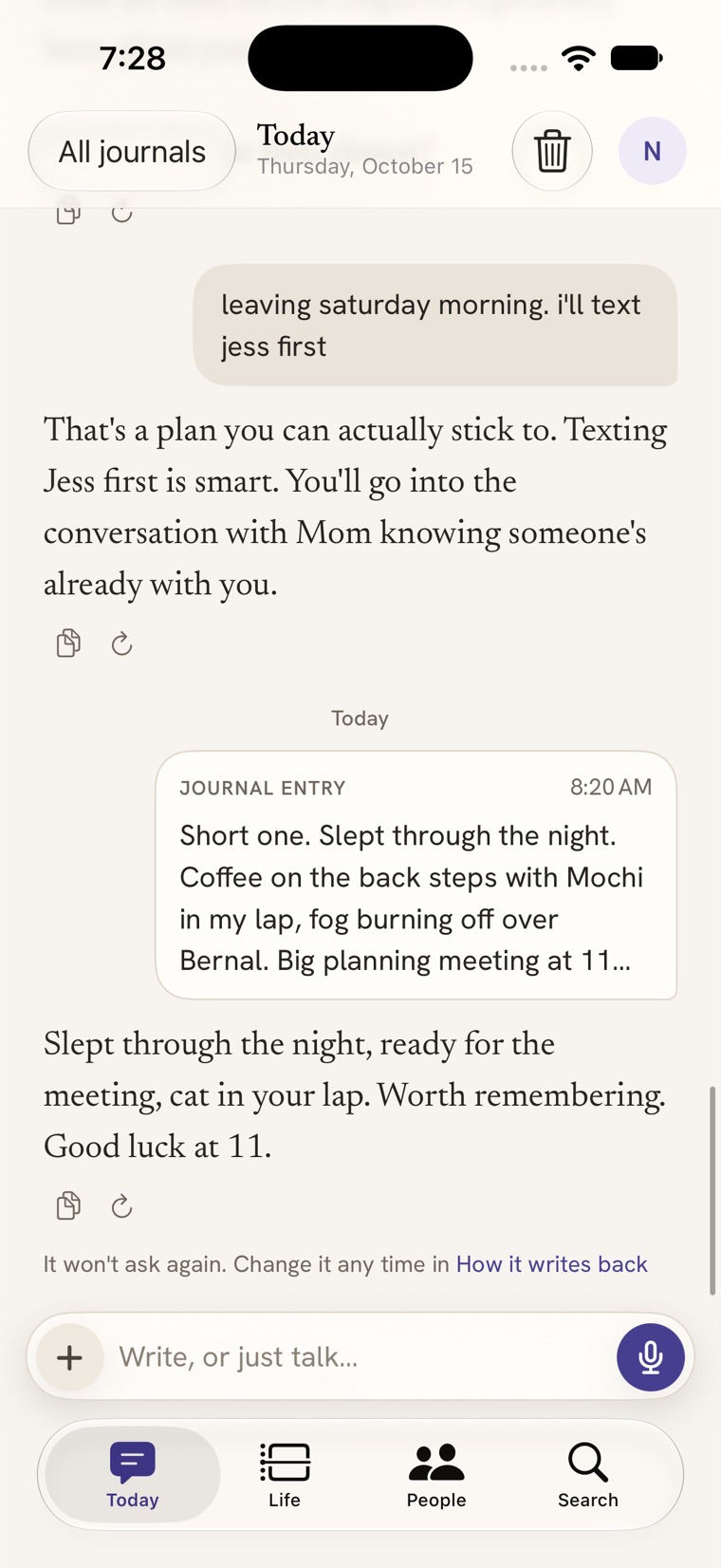
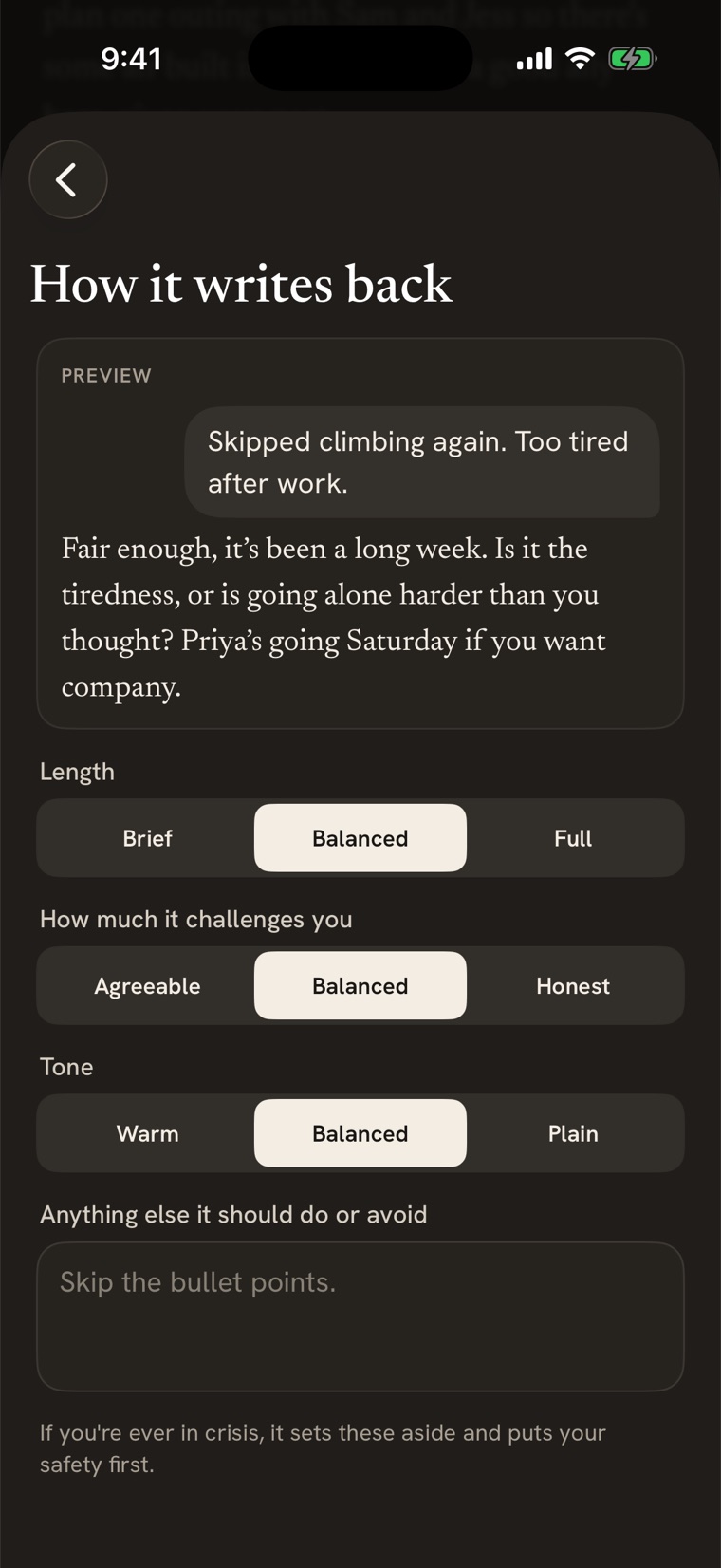
middle place is a journal that writes back. You write what happened the way it comes out, and it answers. Depending on how you’ve asked it to reply, it reflects back what it heard, asks what’s underneath, or just listens. When you can’t find the word for a feeling, a reply that asks the next question often gets you there.
It already knows who your sister is and what happened last month, so you can get straight to the feeling without explaining the background. Feelings you mention are saved as moods using Apple’s emotion labels, which lets you look back at how a week or a month felt, and you can send them to Apple Health too. Ask “when have I felt like this before?” and it searches your journal for moments that match, even where you used different words.
It’s still a journal. If a feeling is overwhelming, won’t lift, or scares you, talk to someone: a friend, a doctor or a therapist.
Questions about processing feelings
How do you process your feelings?
Notice the feeling, name it as precisely as you can, separate it from the facts of what happened, ask what it’s about underneath, and decide what it needs, even if that’s nothing. Writing it down in a journal makes each of those steps easier.
Does journaling help process emotions?
For many people, yes. Writing slows you down and makes you put a feeling into words, and research on expressive writing and on naming emotions suggests both can help. It doesn’t work the same for everyone and it isn’t a treatment, but it’s free, private and easy to try.
How long does it take to process a feeling?
A small one can take a few minutes of writing. Big ones, like grief or a breakup, are processed over weeks or months, a bit at a time. Coming back to the same feeling more than once is normal, not a sign you’re doing it wrong.
What if writing about a feeling makes it worse?
Stop, and do something grounding instead: a walk, a shower, talking to someone. Writing about painful things can feel worse before it feels better, but you don’t have to push through. If it keeps happening, or the feeling is overwhelming, talk to a doctor or therapist.
In crisis? A journal can’t help with that. If you’re in danger of hurting yourself or someone else, please reach people trained to help:
Call or text 988 for the Suicide & Crisis Lifeline (US, 24/7) · Text HOME to 741741 · Call 911 if you’re in immediate danger. Outside the US: findahelpline.com